
Marquees on grass vs hard surfaces: pegs, weights and what to tell us
Grass, concrete, pavers, tiles or decking: the ground under your marquee decides how we hold it down. Here's how it works and what to tell us when you enquire.
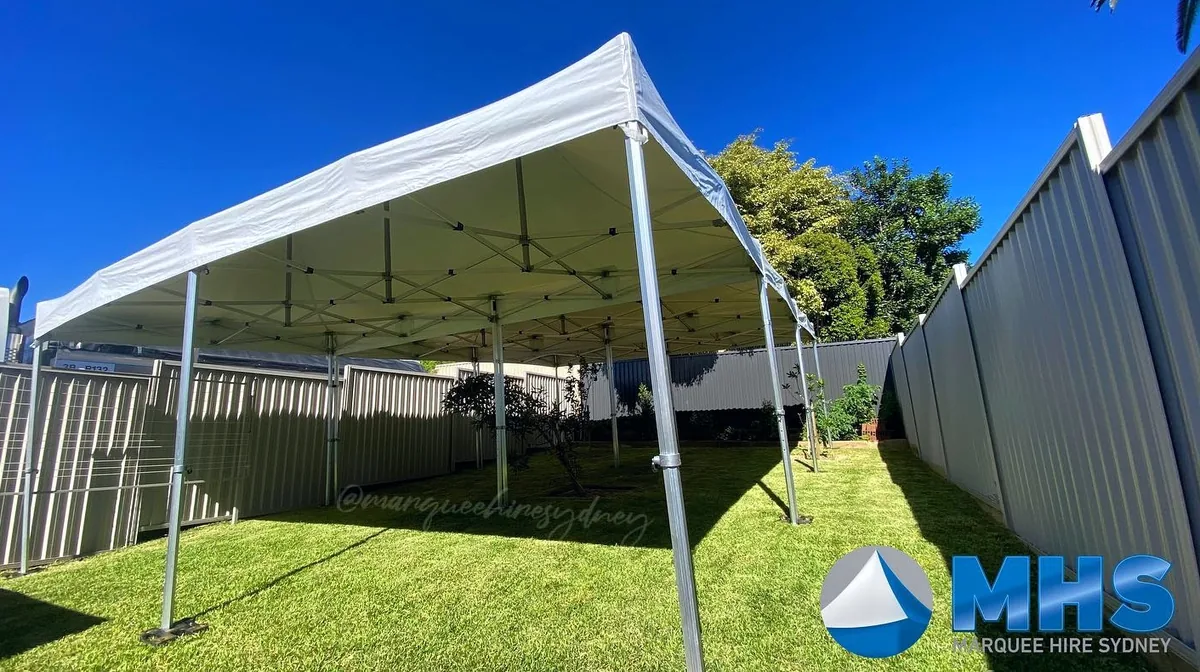
On grass: pegs
On lawn we secure the marquee with pegs. Before we arrive:
- Mark where you want the marquee and allow about 1 m of extra space on each side for pegging.
- Tell us about anything under the ground where we'll be pegging, like pipes, cables or sprinklers.
- Look for a level spot. Soft, boggy or steep ground is worth mentioning when you enquire.
On hard surfaces: weights, never drilling
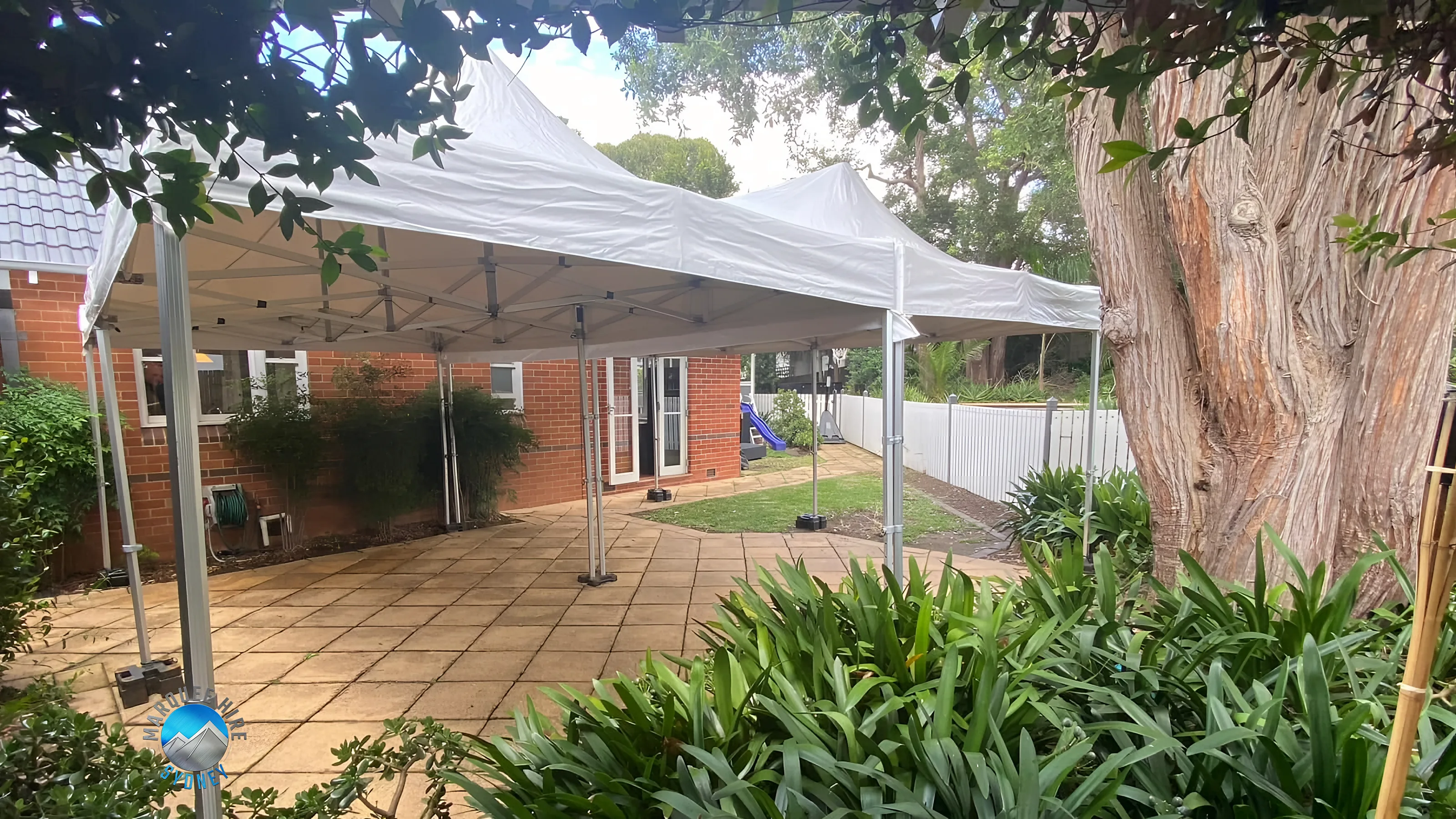
On concrete, pavers, tiles, a wooden floor or decking we can't peg, so we use weights on the legs instead. We never drill into your surface. Weights are an extra cost, and the amount depends on your setup, such as how many marquees and legs there are and the surface. We work it out for each job and show it in your quote before you book.
Mixed surfaces
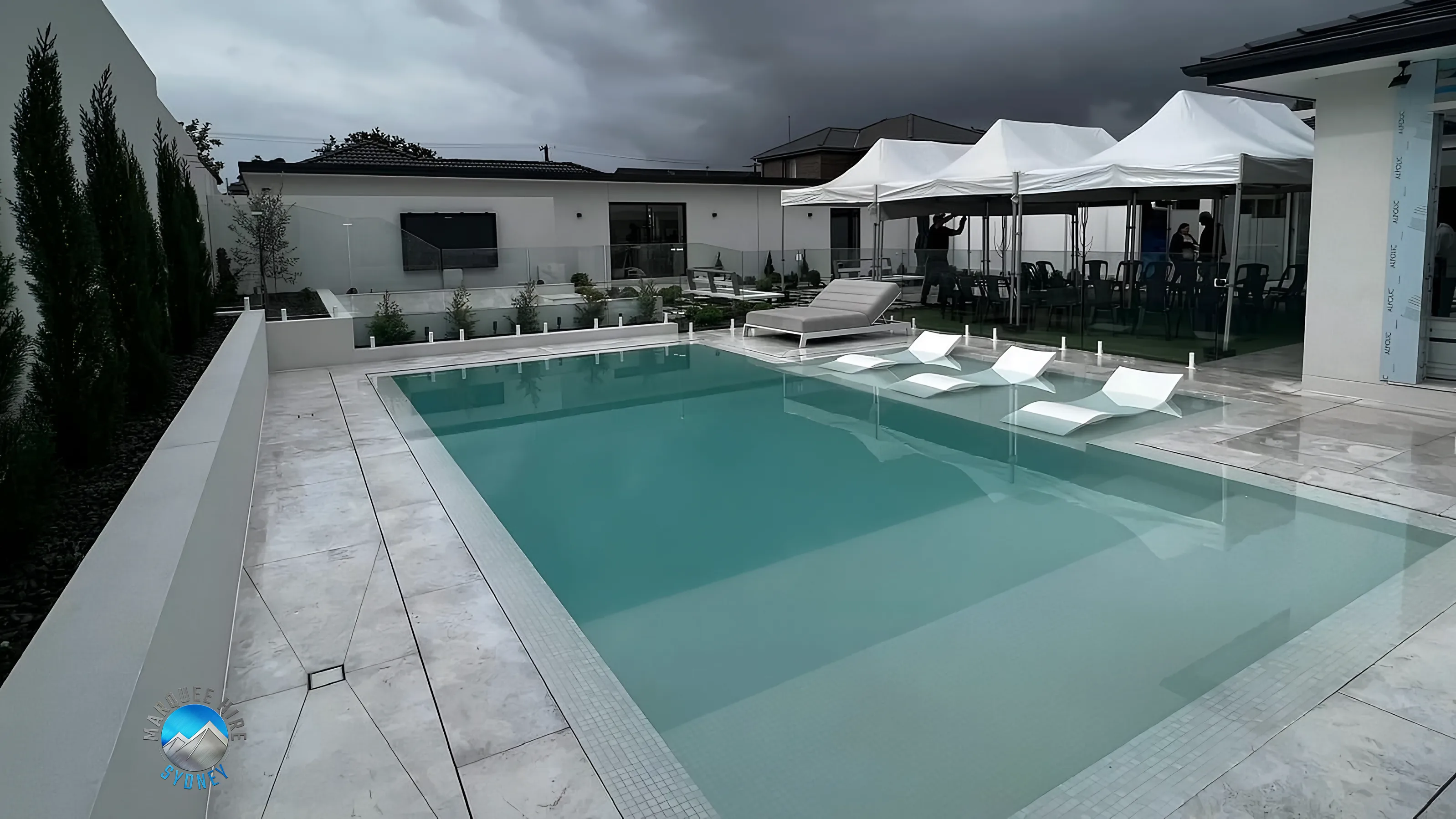
Plenty of yards are part lawn and part patio. That's fine, just tell us. We'll plan which legs are pegged and which are weighted. Synthetic grass, pool surrounds and tiled areas count as hard surfaces too.
What to tell us when you enquire
- The surface: grass, concrete, pavers, tiles, wooden floor, decking or mixed. The quote form asks this.
- Rough measurements of the clear space.
- A photo of the spot, if you can.
- Any slope, steps or a carry of more than 20 m from where we park.
If we can't make the marquee safe on the surface available, we'll tell you and we won't set it up there.